Complaints Procedure for Business Waste Removal Gipsy Hill
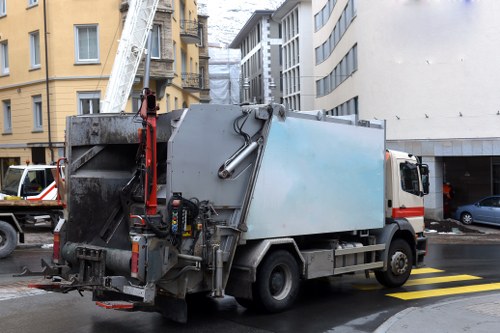 Purpose and scope. This document sets out the formal complaints procedure applicable to our commercial waste and rubbish removal services across the service area. It explains who may raise a concern about business waste removal in Gipsy Hill, the types of service issues we treat as complaints, and the procedural steps we will follow to resolve matters fairly, promptly and transparently. The aim is to ensure consistent handling of issues such as missed collections, unsafe removal practices, damage to property, incorrect disposal methods, and failure to meet agreed safety or service standards.
Who may complain and what is covered: any client currently receiving or who has recently received commercial waste removal Gipsy Hill services may submit a complaint. Complaints may relate to operational performance, billing disputes, communication failures, environmental or health and safety concerns, and alleged breaches of contractual obligations. This procedure does not act as a replacement for statutory rights or dispute mechanisms; instead it provides an internal route for resolution before considering external review.
 How to submit a complaint. Complaints should be raised as soon as reasonably practicable after the matter arises. While this page does not include contact details, complaints may be made in writing or by other established channels used by the rubbish removal provider. When making a complaint, please include: date and time of incident, account or service reference where available, a clear description of the issue, and any relevant photographic evidence or documentation. Complaints that are anonymous or lack sufficient detail may require further information to proceed.
Acknowledgement, investigation and timescales
On receipt, the complaint will be recorded in the company complaints register and acknowledged within a defined period. Typically, we aim to provide an initial acknowledgement within five working days of receipt. The acknowledgement will confirm the complaint reference, the expected timescale for investigation, and the name or role of the person assigned to handle the matter. If the issue is complex, we will set an expected date for a substantive response and advise if an onsite inspection is required.
Investigation process: a designated officer will conduct a fair and proportionate investigation. This may include review of service logs, CCTV or vehicle tracking data where available, interviews with operational staff, review of disposal records, and liaison with any subcontractors involved. All investigations are conducted in line with relevant environmental and safety obligations, and consistent with internal quality procedures. Our objective is to establish the facts and identify remedial actions.
 Possible outcomes and remedies. Following investigation, we may (as appropriate) offer one or more remedies including an apology, corrective service (for example, a repeat collection), a partial or full charge adjustment, or assurance of improved procedures. In cases of property damage or injury we will consider suitable redress in accordance with insurance and contractual arrangements. Where regulatory breaches or environmental harm are identified, we will take actions required by law and report to the relevant authority if necessary.
Escalation, external review and confidentiality
Escalation and internal review: if a complainant is dissatisfied with the initial outcome, they may request an internal review. The review will be conducted by a senior manager who was not involved in the original investigation. Reviews focus on whether the prior investigation was thorough and whether the remedy offered was appropriate; they do not automatically reopen operational decisions absent new evidence. Reviews will be completed within a stated timeframe, normally ten working days of receipt of the request for review.
External independent review. If, after exhausting internal escalation, the complainant remains dissatisfied they may seek an independent or regulatory review in accordance with the applicable statutory framework. This procedure does not include contact details for external bodies, but it recognises that external oversight is sometimes the necessary next step. Parties are reminded that independent review bodies will consider the full factual record and the company’s documented handling of the complaint.
Confidentiality and data protection: all complaints are handled in accordance with applicable data protection and privacy requirements. Personal data will be used only for the purpose of investigating and resolving the complaint and will be retained on file for a defined period as required by company policy and regulatory obligations. We will not disclose complainant details beyond what is necessary for investigation, remedial action, or legal compliance, except where disclosure is required by law.
Record keeping, learning and expectations
Records and continual improvement: every complaint is recorded and analysed to identify recurrent issues or systemic failures. Aggregate complaint data is used to drive improvement in our business waste removal operations across the service area, inform staff training, and refine policies. We commit to learning from mistakes and documenting corrective actions to prevent recurrence.
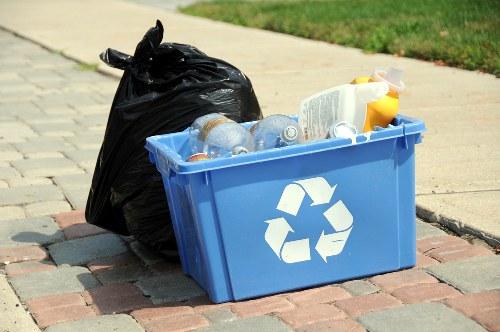 Complainant responsibilities and safety. To enable effective investigation we ask complainants to cooperate by providing accurate information and access where necessary for inspection. Safety considerations may limit certain investigative actions; the company will not carry out unsafe inspections or operations and will communicate any such constraints. Evidence that is falsified or deliberately misleading may result in closure of the complaint without further action.
 Final remarks. We treat all complaints seriously and aim for prompt, fair resolution in line with legal obligations and best practice for commercial waste and rubbish removal in Gipsy Hill and surrounding areas. This complaints procedure provides an internal route aimed at achieving remediation and improving service quality. Where statutory or regulatory processes are available they remain an independent option for the complainant. Our commitment is to transparency, proportionality, and continuous improvement.
